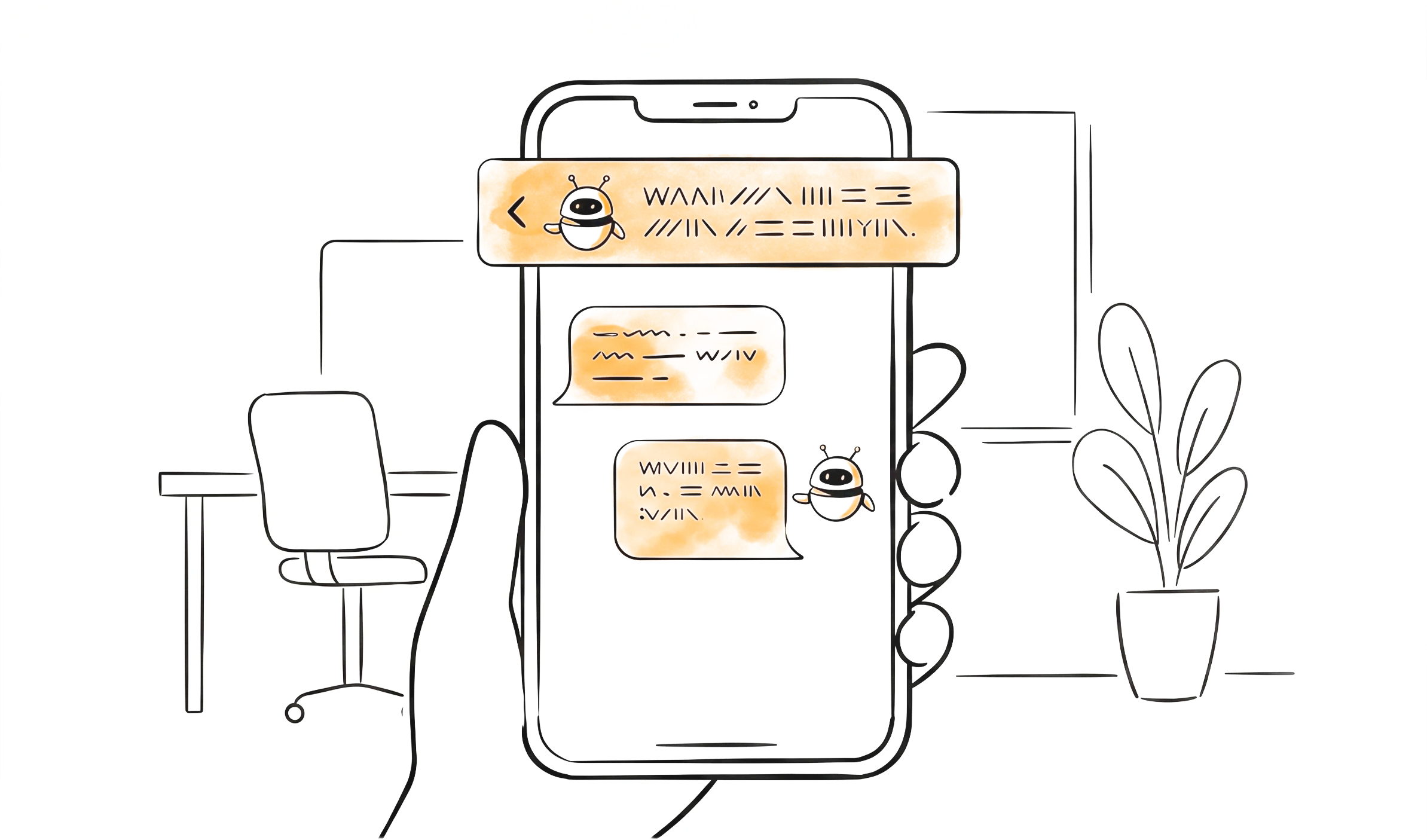
On 20 July 2026 the European Commission published the final guidelines on the transparency obligations set out in Article 50 of the AI Act. The text covers chatbots, deepfakes and synthetic content.
The obligations apply from 2 August 2026. The guidelines draw a clear distinction between the duties of providers and those of the entities that distribute the system to the public.
The document also clarifies how to label content generated by artificial intelligence. The aim is to make it recognisable to those who receive it.
Providers and deployers: two roles with different responsibilities
Those who develop a generative model must add a machine-readable technical marking, such as a watermark in the files or metadata in the code. This obligation concerns the providers of the model.
Those who integrate that model into a chatbot, an image generator or a public-facing service become “deployers”. The deployer must make the information visible and understandable to those who receive it.
Many large providers have already largely implemented the required technical marking. On 10 June 2026 a voluntary Code of Practice on the marking of AI-generated content was published.
The most delicate part often falls to the small businesses that integrate the tool. The practical work consists of revising the interface, adding a message or an icon and checking the marking on the server side.
Why a disclaimer in the terms and conditions is not enough
The guidelines list what is not sufficient to comply with the obligation. A mere reference to the terms of service or to an external document linked elsewhere is not enough.
A marking readable only by a machine and invisible on the screen is not enough. A generic reference to an “assistant”, without clarifying that it is an artificial system, is also insufficient.
The guidelines consider adequate an explicit text message at the start of the interaction, such as “you are interacting with an artificial intelligence system”. An icon or a visual element that is readable in the context where it appears is also considered valid.
The difference is that the user must see the information without having to look for it. The technical marking solves the provider’s problem, not the deployer’s.
Italian SMEs facing the 2 August deadline
In Italy the adoption of artificial intelligence rose from 8.2% in 2024 to 16.4% in 2025 among companies with at least ten employees, according to ISTAT data. Growth is fast, but it is often not accompanied by a regulatory review.
Many companies have integrated a chatbot or a content generator without a legal review of the contract with the provider. In many cases a compliance audit has never been carried out.
Who supervises and how much the fines cost
Fines for breaching the transparency obligations can reach up to 15 million euros or 3% of annual worldwide turnover. Proportionality criteria are provided for small and medium enterprises and for small mid-caps.
In Italy enforcement falls to AgID for non-reserved systems and to the National Cybersecurity Agency for those linked to security. The transparency obligations remain set for 2 August even after the Omnibus regulation, which entered into force on 27 July 2026.
Exceptions exist for standard editing of content, for use by law enforcement and for satirical or artistic works. The scope, however, remains narrow and must be checked case by case.
Original article: tomshw.it