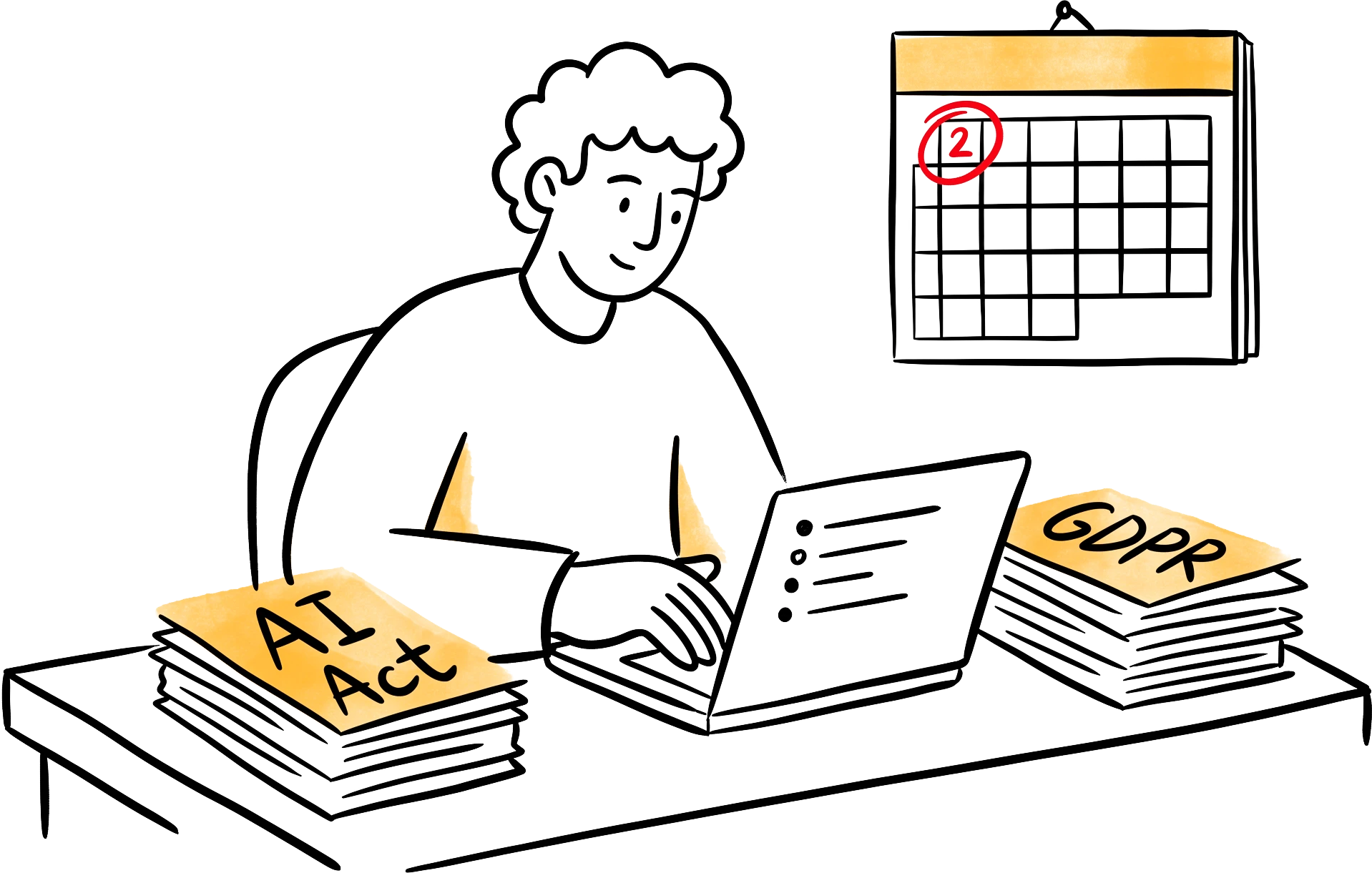
From 2 August 2026, the European AI Act enters full force for high-risk artificial intelligence systems. Italian small and medium-sized enterprises that already use chatbots, automation systems, personnel selection tools or customer screening systems must comply — or face fines of up to 7% of annual worldwide turnover.
According to the latest ISTAT data (December 2025), 16.4% of Italian companies with at least 10 employees use artificial intelligence systems, up 8.2% compared to 2024. The majority of these businesses have not yet mapped their systems against AI Act criteria, nor have they begun compliance processes.
What the AI Act Is and How It Works
EU Regulation 2024/1689 is the first comprehensive European law on artificial intelligence. It applies directly in all member states and creates binding obligations for companies that develop or use AI systems within the EU. The core principle is the risk-based approach: not all systems are treated the same way.
High-risk systems — those subject to the most stringent obligations — fall within eight areas listed in Annex III: remote biometrics, critical infrastructure, education and vocational training, personnel selection, access to essential services, law enforcement, migration and asylum, and administration of justice. For an Italian SME, the most common areas are personnel selection and customer scoring.
Companies using a chatbot on their e-commerce platform, tools like ChatGPT for documentation, or image generation systems fall into the limited risk category: obligations are reduced and consist mainly of disclosing that a product or service is AI-generated.
Key Deadlines
2 February 2025: unacceptable-risk systems were prohibited. 2 August 2025: rules on general-purpose models such as GPT-4, Claude and Gemini came into force. 2 August 2026 is the crucial date for high-risk systems. From 2 August 2027, the extension will cover some additional categories.
How Much Does Compliance Cost?
For an SME, the compliance budget ranges from €150,000 to €250,000 spread over 18 months. Fines can be far higher: up to €35 million or 7% of worldwide turnover for the use of prohibited systems; up to €15 million or 3% of turnover for breaches of high-risk obligations; up to €7.5 million or 1.5% of turnover for false information provided to authorities. Added to this are exclusion from public tenders and reputational damage.
How to Comply in Practice
The first step is to map all AI systems in use by July 2026: a simple inventory including tool name, function, scope of use and supplier.
The second step is a documented AI literacy programme: training materials, a list of participants, learning tests and annual renewals.
The third step is risk classification: for each system, verify whether it falls under Annex III of the AI Act. If so, put in place effective human supervision and the associated technical documentation.
How to Finance the Transition
From February 2026, the Cloud & Cybersecurity voucher is operational, covering up to 50% of expenditure on AI software and digital platforms. The 2026 hyper-depreciation provides a 180% supplement on investments up to €2.5 million. The Italian government has also provided for non-repayable grants of up to 50% of AI compliance costs (maximum €200,000), tax credits of up to 20%, and consulting grants of up to €10,000. In southern Italy, the ZES Unica Mezzogiorno special economic zone offers tax credits of up to 60%.
Thanks to the Digital Omnibus, simplifications previously available only to SMEs with up to 250 employees have been extended to companies with up to 500 employees: simplified technical documentation, priority access to regulatory sandboxes, and the ability to process sensitive data to detect and correct biases. With the support of specialist consultants, an SME of 10–50 employees can complete the entire process in 3–4 weeks.
Original article: https://www.money.it/ai-act-e-pmi-italiane-guida-di-sopravvivenza-burocrazia-dell-intelligenza-artificiale